

Geschichte

Geschichte
shadow

Geschichte

Podstrana befindet sich auf einem malerischen ökologisch erhaltenen östlichen Teil der Region Split-Dalmatien, 8 km von Split entfernt. Direkt am Meer erstreckt sich unterhalb 533 m hohen Perun Hügel und folgt einem 6 km langen Küste bestimmt. Die Bewohner von Podstrana geerbt, die natürliche Schönheit, das milde Klima und malerische Landschaften. Das Tragen von Eigenschaften des mediterranen Klimas, kulturelle und historische Erbe und opulente Tradition, die sich mit dem Rhythmus des modernen Lebens pulsiert.

Die ersten bekannten Bewohner von Podstrana waren die Illyrer, die Mitglieder der Stämme von Dalmatien. Am Ende des 1. Jahrhunderts vor Christus. Cr. Die Römer in dieser malerischen Gegend gründeten die älteste Siedlung namens Pituntium. Nachdem die Kroaten gekeimt Siedlungen an den Hängen des Hügels, und bis hinunter zum Meer ist sehr schön. Das älteste Dorf Gornja Vas, das Meer und die Sonne zugewandt, hat es mit der Quelle -Wasser Mura nahe.

In 839, in der Nähe der Kirche von St. Martin in Podstrana unterzeichneten die ersten kroatischen Friedensabkommen historische mare nostrum, zwischen kroatischen Herzog Mislav und dem venezianischen Dogen Peter Tradonika nach jungen kroatischen Staates im Konflikt mit Venedig zu gewinnen.

Cradle of Podstrana ist Stara Podstrana, eine Längsreihe von hundertjährigen Steinhaus am Fuße des steilen Klippen VRSINE, in deren Höfen und Straßen permanent pulsierenden Geist der Vergangenheit. Das Leben von Podstrana gegossen in den Bereich des Küstengürtels, in dem heute eine niedrigere verstädterten Siedlungen: Strozanac, Grljevac, St. Martin, Mutogras. Verbinden sie in einer kontinuierlichen Reihe wird Podstrana mit dem Meer behandelt und bildet eine niedrige spielerische sandigen Buchten, Strände, begleitet die Hotels, Pensionen, Gasthöfe, eingezäunten gepflegten Anpflanzungen von mediterraner Vegetation.

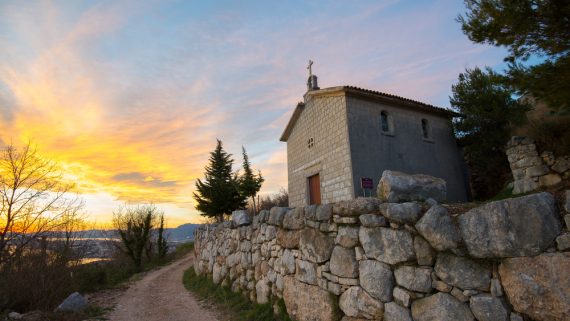
Restaurierte Villa Cindro zeigt sich die Schönheit und Harmonie der Steinfassaden, die über den säkularen sorgfältig gepflegten Gärten steigen. Auf den Berggipfeln in Kontakt mit dem Himmel svetojurjevska Schreine, zwei dicke geistlichen Festungen sakralen altkroatischen Erbe scheint. Steinfragmente, ein Glockenturm und konsistente Rosetten, Skulpturen, Reliefs und Retabel treue Gönner in deren Symbole Link, um den Geist der Tradition und ovovremenog Leben erhalten: Die heutigen Erben Podstrane stolz Spuren der Vergangenheit bewahrt.

MONUMENTS
Das alte Dorf vollständig, Ruzic Zoll, Haus Cindro, Familie Emblem Cindro, St. Jure über dem Dorf mit einem Friedhof, Kirche. Jure Perun, eine Marmorstatue der Jungfrau, eine Statue von St. Anthony aus dem 18. Jahrhundert Padua. Die Kirche St. Anthony und Rocco mit der Umwelt, die Pfarrkirche in alten Podstrana. Die Inschrift auf dem Schrein der Pfarrkirche, andere Denkmäler (Altäre, Gemälde) in der Pfarrkirche St .. Fabian, Steinbogen Inschrift Bosančica, ehemals Kapelle Schatz, General Friedhof des Dorfes und die Überreste der römischen Villa bei Unserer Lieben Frau von der Stadt.

archäologischen Funden
Megalith-Blöcke der ursprünglichen Mauern Pituntija die Wand, die den Friedhof umgibt. Martin
Die Menge Pišćenica
 Ein Fragment eines römischen Mosaik auf dem alten Friedhof von St. Martin
Illyrischen Schloss alten Podstrana
Steinschale aus der römischen Zisterne in St. Martin
die Überreste eines römischen Steinolivenmühlen auf dem Friedhof in St. Martin
Steinbalken der alten Weinpresse für Öl und Wein
Rekonstruktion der Grabstein Inschriften Lucius Artorius Caste prominenten römischen Zahlen II / III Jahrhundert NE
Der Torso der römischen Gottheit in St. gefunden Martin
Relief Silvana und Nymphen in St. Anthony in der alten Podstrana
Stele Scheide Städtische Mutter Oberin eines römischen Gutshofs aus dem 1. Jh. n. e. (als Grabstein auf dem Friedhof von St. Martin verwendet)
Grabstein-Veteran Mark Attia Verekundijana I / II st. n. e. von Sta. Martina
Grabstein JUKUNDA Attia und ihre Tochter Octavius ​​Valentine St. Martina
Grabstein Krescentije Vare (I / II st. n. e.)
Stein Urne Krescentije Vare
Die alte Stele wurde über dem Tor des Hofes in der alten Podstrana (gebaut in die Rückseite des Altars in der Pfarrkirche) eingefügt
Tombstone gebaut in das Haus Cindro
Späte römische Villa in Polaca
Inschrift Ausonius Gouverneur der Spätantike Provinz Dalmatien V / VI Jahrhundert. NE

Privacy Preference Center

Cookies

We believe in being clear and open about how we collect and use data related to you. In the spirit of transparency, this policy provides detailed information about how and when we use cookies. This cookie policy applies to any our page that links to this policy or incorporates it by reference.

Does our site use cookies?
Yes. We use cookies and other technologies to ensure everyone who uses our site has the best possible experience. Cookies also help us keep your account safe. By continuing to visit or use our pages, you are agreeing to the use of cookies and similar technologies for the purposes we describe in this policy.

What is a cookie?
A cookie is a small file placed onto your device that enables our site features and functionality. For example, cookies enable us to identify your device, secure your access to our site and our sites generally, and even help us know if someone attempts to access your account from a different device. Cookies also enable you to easily share content on our site and help us serve relevant ads to you.

When does our site place cookies?
We use cookies on our site. Any browser visiting these sites will receive cookies from us. We also place cookies in your browser when you visit non-our site sites that host our plugins (for example, our site's "Share" button) or tags.

What types of cookies does our site use?
We use two types: persistent cookies and session cookies. A persistent cookie helps us recognize you as an existing user, so it's easier to return to our site or interact with our services without signing in again. After you sign in, a persistent cookie stays in your browser and will be read by our site when you return to one of our sites or a partner site that uses our services (for example, our sharing or job application buttons). Session cookies only last for as long as the session (usually the current visit to a website or a browser session).

What are cookies used for?
Cookies can be used to recognize you when you visit our site, remember your preferences, and give you a personalized experience that's in line with your settings. Cookies also make your interactions with our site faster and more secure. Additionally, cookies allow us to bring you advertising both on and off the our site sites, and bring customized features to you through our site plugins such as our "Share" button.
Authentication
If you're signed in to our site, cookies help us show you the right information and personalize your experience.
Security
We use cookies to enable and support our security features, and to help us detect malicious activity and violations of our User Agreement.
Preferences, features and services
Cookies can tell us which language you prefer and what your communications preferences are. They can help you fill out forms on our site more easily. They also provide you with features, insights, and customized content in conjunction with our plugins.
Advertising
We may use cookies to show you relevant advertising both on and off the our site site. We may also use a cookie to learn whether someone who saw an ad on our site later visited and took an action on the advertiser's site. Similarly, our partners may use a cookie to determine whether we've shown an ad and how it performed, or provide us with information about how you interact with ads. We may also work with a partner to show you an ad on or off our site, such as after you've visited a partner's site or application.
Performance, Analytics and Research
Cookies help us learn how well our site and plugins perform in different locations. We also use cookies to understand, improve, and research products, features, and services, including when you access our site from other websites, applications, or devices such as your work computer or your mobile device.

What is Do Not Track (DNT)?
DNT is a concept that has been promoted by regulatory agencies such as the U.S. Federal Trade Commission (FTC), for the Internet industry to develop and implement a mechanism for allowing Internet users to control the tracking of their online activities across websites by using browser settings. The World Wide Web Consortium (W3C) has been working with industry groups, Internet browsers, technology companies, and regulators to develop a DNT technology standard. While some progress has been made, it has been slow. No standard has been adopted to this date. As such, our site does not use "do not track" signals.

How are cookies used for advertising purposes?
Cookies and other ad technology such as beacons, pixels, and tags help us serve relevant ads to you more effectively. They also help us provide aggregated auditing, research, and reporting for advertisers, understand and improve our service, and know when content has been shown to you. Note: Because your web browser may request advertisements and beacons directly from ad network servers, these networks can view, edit, or set their own cookies, just as if you had requested a web page from their site.
If you are a our site member but logged out of your account on a browser, our site may still continue to log your interaction with our services on that browser for up to 30 days in order to generate usage analytics for our services, which analytics we may share in aggregate form with our advertising customers.
Unless you clear these cookies from your browser, we may use this information to:
provide more relevant, interest-based advertising
provide aggregate reports of ads activity to advertisers and websites hosting the ads
help website and app owners understand how visitors engage with their sites or apps
detect and defend against fraud and other risks to protect users and partners
improve our products
We do not provide any personal information that we collect to advertisers. You can opt-out of off-site and third-party-informed advertising by adjusting your settings. Please note that opting out will not remove advertising from the pages you visit; it will mean that the ads you see may not be matched to your interests. If you are not a our site member, learn more about cookies and how to opt out. Click here to learn more about the self-regulatory principles we adhere to.

What third-party cookies does our site use?
Our cookie table lists some of the third party cookies on our sites. Please note that the names of cookies, pixels and other technologies may change over time.

Controlling cookies
Most browsers allow you to control cookies through their settings preferences. However, if you limit the ability of websites to set cookies, you may worsen your overall user experience, since it will no longer be personalized to you. It may also stop you from saving customized settings like login information.

What to do if you don't want cookies to be set or want them to be removed?
If you don't want us to use cookies when you visit our site, you can opt-out of some cookies on your settings page. In order for us to recognize that you have opted out of cookies, we have to place our our site opt-out cookie on your device so we can know not to set other our site cookies the next time you visit. If you do not want to receive cookies, you can also change your browser settings on your computer or other device you're using to access our services. If you use our site without changing your browser settings, we'll assume that you're happy to receive all cookies on the our site website. Most browsers also provide functionality that lets you review and erase cookies, including our site cookies. Please note that the our site site will not work properly without cookies.
To find out more about cookies, including how to see what cookies have been set and how to manage and delete them, visit wikipedia.org, www.allaboutcookies.org, or www.aboutcookies.org.